
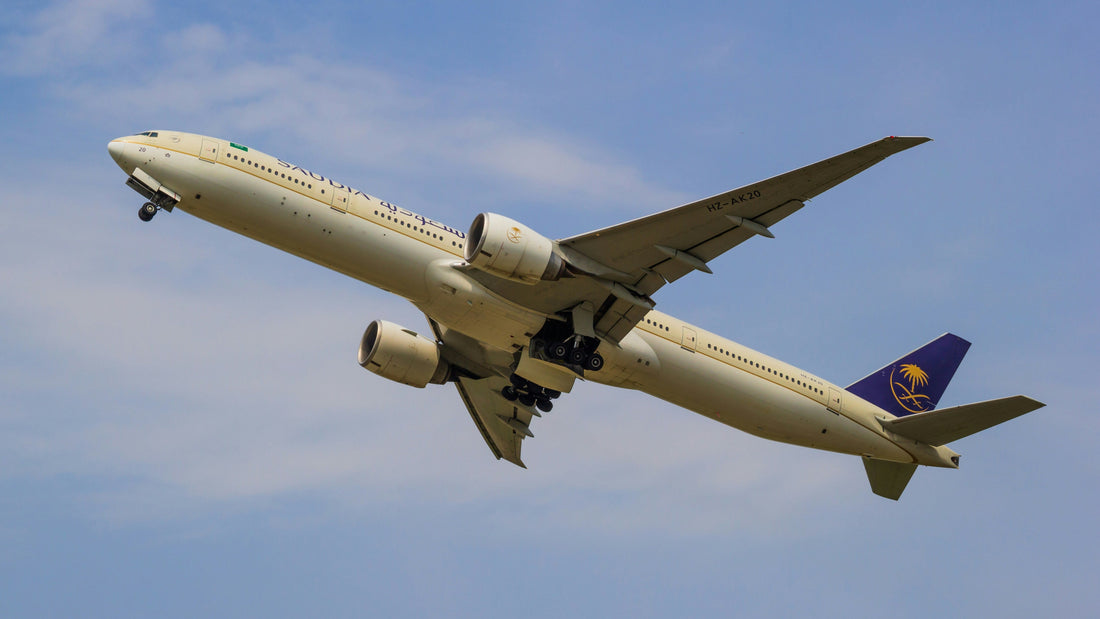
What is lift? An explanation for non-scientists
Partager
If a plane can fly, it's not thanks to magic, but to a fascinating physics phenomenon called lift. However, you don't need to be an engineer or a pilot to understand it: lift is simply the force that allows planes – and birds – to stay in the air.
Lift, the secret to airplane flight
Imagine an airplane weighing several hundred tons accelerating down a runway. How can such a heavy object leave the ground? The answer lies in an invisible force: lift.
Lift is what counteracts the weight of the aircraft. Without it, a plane could never take off, and even birds would be grounded.
How wings create lift
The particular shape of the wings plays an essential role. They are rounded on top and flatter underneath. When air passes around the wing:
-
It flows faster above than below.
-
This speed difference creates a pressure difference.
-
Result: the air pushes the wing upwards, and this force is called lift.
The faster the plane goes, the faster the air flows over the wings, and the more lift increases. The angle at which the wing meets the air (called the angle of attack) also plays a crucial role.
In summary: it's the wings and speed that allow a plane to stay in the air.
A phenomenon found in everyday life
Lift is not exclusive to airplanes. It can be observed in many everyday situations:
-
On a bicycle, when you go fast, you are more stable, almost as if the air is "carrying" you.
-
Birds naturally use lift: watch a seagull glide over the sea without moving its wings; it's exactly the same principle as an airplane.
-
Gliders, meanwhile, fly without an engine by solely exploiting lift and air currents.
Why understanding lift is essential in aviation
For pilots, understanding lift is a fundamental requirement. It's what allows them to know what speed to take off at, how to keep a plane in flight, and, above all, how to avoid a loss of lift, which is called a stall.
But beyond the technical aspect, lift remains a fascinating subject for aviation enthusiasts. It transforms simple mechanics into something almost poetic: thanks to it, humans have been able to fulfill their dream of flying.
Conclusion: the scientific magic behind flight
Lift is an invisible but essential force. Without it, no plane, helicopter, or bird could leave the ground. So next time you watch a plane take off, remember: it's not a miracle, but lift doing all the work.
Watch a video about lift:
FAQ – Understanding Lift
What is lift in aviation?
It is the force that allows an aircraft to ascend and stay in flight, counteracting its weight.
How do aircraft wings create lift?
They exploit the pressure difference between the air flowing above and below the wing.
Can an airplane fly without lift?
No, without lift it falls, because there is nothing to compensate for its weight.
Do birds use the same lift as airplanes?
Yes, their wings operate on the same principle, naturally.
Why is speed important for lift?
Because the faster the plane goes, the faster the air flows around the wings, and the more lift increases.
Why planes don't fall in case of engine failure?
The different types of aircraft engines: piston, turbofan, jet
How does an airplane wing work? (Simple and clear explanation)