
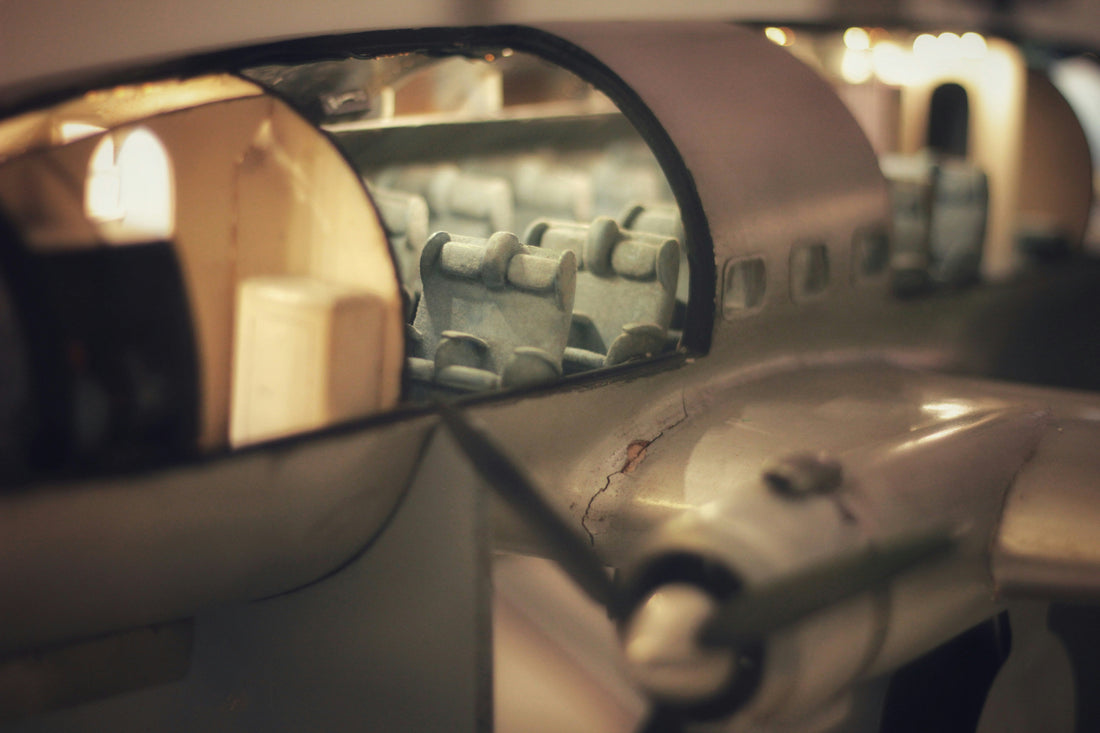
How to weather a model airplane for a more realistic look
Partager
When you finish painting an airplane model, the result can sometimes seem too perfect, almost artificial. In reality, an airplane always bears the marks of time and use: smoke traces, paint chips, dirt... This is where weathering comes in. This technique consists of giving a more authentic look to your model by simulating the natural wear and tear of airplanes. No need to be an expert: with a few simple tips, you can transform a "clean" model into a reproduction full of character and realism.
What is weathering in model making?
Weathering, or patina, is the art of reproducing the effects of time and environment on a model. This can be subtle, with a few accentuated structural lines, or more pronounced, with traces of rust, dust, and exhaust. The goal is not to make the aircraft dirty, but to tell a story: that of an aircraft in service, which has flown, landed, been maintained, and sometimes pushed to its limits.
Preparing your model before weathering
Before starting, you need a good base. The paint must be well applied and dry, ideally protected by a glossy varnish. This varnish acts as a barrier: it prevents weathering products from damaging the paint and facilitates their application. A little masking tape can also be useful to protect certain areas you want to keep clean. Finally, get your tools out: fine brushes, pigments, pastels, sponges, or even an airbrush if you have one.
Main weathering techniques for airplane models
The wash
Washing consists of applying very diluted paint into the recesses of the model, especially the panel lines. This simple gesture immediately adds depth and brings out the details. Once dry, wipe off the excess and the aircraft already looks more alive.
Dry brushing
This is a simple and effective technique: dip a brush in paint, wipe it almost completely, then lightly brush it over edges and raised details. The result gives the illusion of worn metal parts and highlights the structure.
Pigments and pastels
Ideal for simulating dust, mud, or wear marks, pigments are applied dry and then fixed with a varnish. They provide a subtle texture and make the model more credible.
Exhaust and smoke traces
A military aircraft never comes out of a flight perfectly clean. To reproduce these marks, you can use dark pigments or an airbrush, lightly spraying behind the exhausts or on the wings. The effect is stunning when applied with finesse.
Paint chipping
With a small sponge or a very fine brush, apply metal or aluminum-colored paint to certain worn areas: hatches, wing edges, areas where mechanics walk. These details give the impression that the paint has chipped over time.
Weathering mistakes to avoid
There's a great temptation to overdo it, especially when starting out. However, excessive weathering can lead to an unrealistic result. Another common mistake is not adapting the weathering to the type of aircraft: a World War II fighter will not have the same marks as a modern airliner. Finally, be careful with overly contrasting colors: a subtle effect is often more convincing than an overly heavy treatment.
Discover our selection of airplane models
Finalizing and protecting the rendering
Once you are satisfied with the result, it is advisable to apply a final matte or satin varnish to unify the whole. This varnish also protects the pigments and ensures the longevity of the work done. Your model is then ready to proudly join the display case, with a more realistic and characterful appearance.
Conclusion
Weathering is an exciting step that transforms a simple model into a true collector's item. There's no need to master everything on the first try: start with one or two techniques, observe your results, and progress at your own pace. Every weathered airplane tells a story, and that's ultimately what makes model making so lively and captivating.
FAQ: our team answers all your questions
What is weathering in model making?
It is a technique that consists of aging a model to reproduce the wear, dirt, and real traces of use of an airplane.
How to give an aged effect to an airplane model?
By combining several techniques such as washing, dry brushing, pigments, or even paint chips on friction areas.
Should a model be varnished after weathering?
Yes, a matte or satin varnish helps protect the applied effects and achieve a more uniform and durable finish.
Is weathering reserved for experts?
Not at all. Even beginners can achieve good results by trying simple techniques such as washing or dry brushing.