
The Birth of Commercial Aviation: From Yesterday to Today
Partager
Just over a century ago, the idea of air travel seemed like science fiction. While the first powered flights of the early 20th century had opened a new path, this feat still needed to be transformed into a public service. Commercial aviation was about to be born, driven by a handful of daring pioneers and technical innovations that would revolutionize the way people travel around the world.
The first steps of commercial aviation
The history of commercial aviation officially began in 1914, in Florida. On that day, a small Benoist XIV seaplane carried a single passenger between Tampa and St. Petersburg. The flight lasted barely 23 minutes, but it marked the very first paid air service in history.
Soon, other initiatives appeared, often related to mail transport. The planes of the time could only accommodate a few passengers, but they paved the way for what would become a gigantic global network. The first civil airlines were born, often supported by states, aware of the strategic importance of aviation.
The 1920s-1930s: the rise of airlines
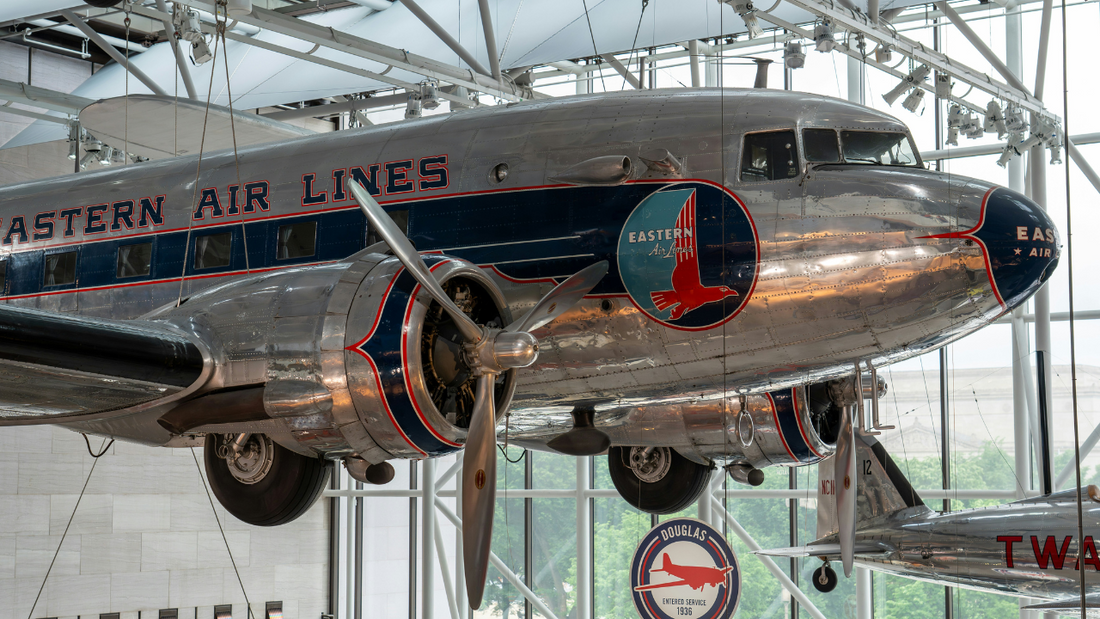
In the 1920s, technical progress made planes more reliable and safer. Aircraft like the Fokker F.VII and the mythical Douglas DC-3 changed the game. The DC-3, in particular, was so robust and profitable that it would be used for decades, becoming the backbone of nascent air transport.
The role of airmail was central at the time: transporting letters quickly justified the cost of the first flights. But little by little, the number of passengers increased. In Europe as in the United States, national airlines emerged – Air France in 1933, for example – laying the foundations of modern air transport.
The post-war period: the golden age of commercial aviation
World War II accelerated aeronautical innovations. At the end of the conflict, these technological advances were adapted to civil aviation. Aircraft became larger, safer, and more comfortable.
The 1950s marked a turning point with the arrival of commercial jets. The British De Havilland Comet paved the way, quickly followed by more advanced models like the Boeing 707 and the French Caravelle. The world shrank: it was now possible to cross the Atlantic in a few hours, in pressurized and air-conditioned cabins.
Air travel was no longer reserved for an elite. Aviation entered its golden age, a symbol of modernity and prestige.
The 1970s-2000s: gigantism and supersonic
In 1970, Boeing made a splash with the 747, nicknamed "Jumbo Jet". With over 400 seats, it democratized long-haul flights and radically changed air transport. The 747 quickly became an icon of the sky, recognized worldwide.
In another vein, Europe inspired dreams with the Concorde, capable of connecting Paris to New York in just 3h30, at Mach 2. A symbol of elegance and prestige, it remained, however, an exceptional aircraft, inaccessible to the general public due to its high cost.
The 1990s also saw the arrival of a new economic model: low-cost airlines. Thanks to them, flying became affordable for a large part of the population. The airplane, once a luxury or privilege, became commonplace and a common mode of transport.
Commercial aviation today
The 21st century opens a new era. The Airbus A380, a true giant of the skies, impresses with its capacity for over 800 passengers. The Boeing 787 Dreamliner, meanwhile, focuses on comfort, energy efficiency, and the use of composite materials.
Low-cost airlines, once confined to short-haul flights, are now expanding into long-haul. Major international hubs like Dubai, Doha, and Singapore are becoming crossroads of global air transport.
But aviation also faces new challenges. Carbon footprint, kerosene dependency, and the search for alternative fuels are at the heart of concerns. Commercial aviation of the future will have to reconcile performance, accessibility, and environmental respect.
Discover our selection of model airliners
From a few passengers to millions every day
In a century, commercial aviation has gone from small 2-seater seaplanes to giants capable of transporting hundreds of passengers from one continent to another in a few hours. It has brought people closer together, changed our travel habits, and reshaped the world map.
And tomorrow? Perhaps we will see the supersonic again, but cleaner and quieter. Perhaps we will travel with hybrid or electric planes. One thing is certain: the history of commercial aviation is not over, it continues to be written.
👉 What do you prefer in commercial aviation: speed, comfort, or flight accessibility?
Watch a video about the beginning of commercial aviation:
FAQ: we answer all your questions
When was the first commercial flight in history?
The first commercial flight took place on January 1, 1914, in Florida, between Tampa and St. Petersburg, aboard a small Benoist XIV seaplane.
Which aircraft truly launched modern commercial aviation?
The Douglas DC-3, which appeared in the 1930s, is considered the aircraft that revolutionized commercial aviation thanks to its reliability and profitability.
Why is the Boeing 747 so important in aviation history?
The Boeing 747, launched in 1970, made it possible to transport more than 400 passengers over long distances, making international flights accessible to a larger number of people.
Was the Concorde part of commercial aviation?
Yes, the Concorde was indeed a commercial aircraft, operated by Air France and British Airways, but its high cost reserved it for a privileged clientele.
What are the current challenges for commercial aviation?
Today, commercial aviation must meet the challenge of reducing its environmental impact, notably through biofuels, more economical aircraft, and hybrid or electric projects.