
The Story of the Boeing 747
Partager
For over 50 years, the Boeing 747 has captivated aviation enthusiasts and left an indelible mark on the history of air transport. Nicknamed the Jumbo Jet, this legendary aircraft revolutionized long-haul travel by making flights more accessible and pushing the boundaries of aeronautical engineering. From its maiden flight in 1969 to the end of its production in 2023, the 747 enjoyed an exceptional career, becoming a true icon of the skies.
But how did this extraordinary aircraft come into being? Let’s take a look back at the fascinating history of the Boeing 747.
Introduction
When one thinks of the most iconic airliners, the Boeing 747 is often the first that comes to mind. With its instantly recognizable silhouette and distinctive upper deck, it marked the history of aviation like no other aircraft before it. But beyond its appearance, it was above all its role in democratizing air travel that made it a true legend.
Conceived in the late 1960s, at a time when air traffic was booming, the 747 had to meet a major challenge: transport more passengers over longer distances, while reducing airline costs. A risky gamble, but a successful one! From its entry into service, it disrupted the air transport market and established itself as an essential player in the skies.
In this article, we will revisit the exciting history of the Boeing 747, from its design to its legacy, including its evolutions and its impact on the aeronautical industry.
The Origins of the Boeing 747
In the 1960s, air transport experienced spectacular growth. Aircraft like the Boeing 707 and the Douglas DC-8 opened the era of commercial jet flights, but airlines quickly needed larger aircraft to meet growing demand. At that time, airfares were still expensive, and the goal was to reduce per-passenger costs by increasing aircraft capacity.
It was in this context that Juan Trippe, the visionary head of Pan Am, urged Boeing to design a revolutionary aircraft: one capable of carrying twice as many passengers as existing models. At the same time, the US military was looking for a high-capacity cargo plane, a project in which Boeing participated with the idea that its future airliner could benefit from these technological advances.
The team led by Joe Sutter, the program's chief engineer, then set to work. Faced with an immense technical challenge, they conceived an unprecedented configuration: a wide-body aircraft, with an upper deck for the cockpit, thus allowing clear access for a potential cargo version. This innovation gave the 747 its unique and instantly recognizable profile.
The development of the Boeing 747 represented a colossal gamble for Boeing, which invested considerable sums and even built a new factory in Everett, near Seattle, specifically for the assembly of the aircraft. In less than four years, the first prototype rolled out, ready to change the world of aviation forever.
First Flight and Entry into Service
After several years of intense development, the Boeing 747 was finally ready to take flight. On February 9, 1969, before the eyes of engineers, journalists, and aviation enthusiasts, the prototype made its first test flight from the Boeing factory in Everett, Washington. At the controls, Jack Waddell, chief test pilot, accompanied by his crew, guided the aircraft into the sky for a decisive mission. Despite a few adjustments to be made, the flight was a success, proving that this giant of the air was ready for the next steps.
After a series of tests and adjustments, the 747 received its official certification in December 1969, paving the way for its commercial operation. The first airline to put it into service was Pan Am, which inaugurated its first passenger flight on January 22, 1970, between New York and London. This flight marked a turning point in aviation history: for the first time, an aircraft could carry more than 350 passengers on a single journey, with unparalleled comfort and range for its time.
Despite some initial technical problems – notably engine failures and necessary adjustments to airport infrastructure to accommodate this extraordinary aircraft – the Boeing 747 quickly established itself as the new standard for long-haul transport. Airlines worldwide placed orders, attracted by its immense capacity and economic efficiency.
In just a few years, the 747 became a symbol of modern travel, ushering in the era of mass air transport and propelling Boeing to the top of the aeronautical industry.
Innovations of the Boeing 747
The Boeing 747 is not just a larger aircraft than others: it also brings a series of innovations that revolutionized commercial aviation. From its conception, it was designed to meet the challenges of long-haul transport, while offering economic efficiency and improved passenger comfort.
One of the most significant innovations is its wide body, known as a widebody. At nearly 6 meters wide, it can accommodate up to 10 seats per row, offering airlines unprecedented flexibility in cabin layout. This configuration also paved the way for new comfort standards, with larger spaces for passengers and the possibility of integrating lounges and bars in the early versions of the 747.
Another distinctive feature is the upper deck, which initially housed a lounge for first-class passengers before being converted into additional space for seating in later versions. This unique, instantly recognizable design is the result of pragmatic thinking: by placing the cockpit above the main fuselage, Boeing could easily transform the aircraft into a cargo version with a hinged nose door, facilitating the loading of bulky goods.
In terms of engines, the 747 was the first airliner equipped with four high-bypass turbofan engines, offering better fuel efficiency and impressive range. Thanks to these powerful engines, it could cover long distances non-stop, a major asset for airlines operating on transatlantic and transpacific routes.
Finally, the Boeing 747 also introduced advances in safety and reliability. Its redundant system for flight controls and robust architecture made it an extremely safe aircraft, which would become a benchmark for decades to come.
With all these innovations, the 747 not only redefined aviation standards: it paved the way for a new era of air transport, making intercontinental travel more accessible and more comfortable than ever.
The Different Versions of the 747
Over the decades, the Boeing 747 underwent several evolutions to adapt to airline needs and technological advancements. Each new version brought improvements in performance, comfort, and fuel efficiency, allowing this iconic aircraft to remain competitive for over 50 years.
The 747-100: The Pioneer
The very first version, the 747-100, entered service in 1970. With a capacity of up to 366 passengers and a range of approximately 8,500 km, it marked the beginning of the Jumbo Jet era. However, it was quickly replaced by the 747-200, which featured more powerful engines and increased range, making it more attractive for long-haul flights.
The 747-300: More Space for Passengers
In the 1980s, Boeing introduced the 747-300, distinguished by an extended upper deck, allowing it to accommodate more passengers. This version also improved cruising speed and optimized interior layout to offer better comfort.
The 747-400: The Golden Age of the Jumbo Jet
Launched in 1989, the 747-400 became the most popular and best-selling version. It incorporated major improvements, including modernized flight controls, more advanced avionics, and better fuel consumption thanks to more efficient engines. With a range of over 13,000 km, it allowed non-stop flights between almost any major cities in the world. This version remained in service for decades and became a true symbol of long-haul air transport.
The 747-8: The Last of the Line
Facing the rise of more fuel-efficient twin-engine aircraft, such as the Boeing 777 and the Airbus A350, Boeing developed the 747-8, the model's final evolution. Introduced in 2010, it featured a longer fuselage, improved aerodynamics, and even more powerful engines, inspired by those of the 787 Dreamliner. However, despite its innovations, it did not achieve the expected success, as airlines increasingly preferred smaller and more economical aircraft.
Cargo and Special Versions
In addition to passenger models, the 747 was also adapted into several cargo versions, becoming one of the most widely used freight aircraft in the world. It was also selected for special missions, such as the famous Air Force One, the presidential aircraft of the United States, or the Shuttle Carrier Aircraft, used by NASA to transport space shuttles.
With all these variations, the Boeing 747 managed to evolve and remain relevant for more than half a century. It forever marked the history of aviation, proving that even an aircraft designed in the 1960s could adapt to the demands of modern air transport.
The Boeing 747 in Popular Culture
Beyond its role in air transport, the Boeing 747 has established itself as a true icon of popular culture. Thanks to its unique design and its reputation as a Jumbo Jet, it has become one of the most recognizable aircraft in the world, appearing in numerous films, TV series, and other media.
A Star Aircraft in Cinema and Television
From the 1970s, the Boeing 747 was featured in major films. One of the first feature films to star it was Airport 1975, an aerial thriller depicting a dramatic accident involving the famous aircraft. It then appeared in several blockbusters such as Die Hard 2, Armageddon, and James Bond: Moonraker, where it transported a space shuttle.
In television series, it is often used to illustrate international travel or suspenseful scenes in mid-air. It is also found in documentaries and shows dedicated to aviation, highlighting its history and impact on the aeronautical industry.
Air Force One: A Mythical Presidential Version
The Boeing 747 is also known for its role as Air Force One, the official aircraft of the President of the United States. The modified version of the 747-200, and later the 747-8, is equipped with advanced technologies, a command center, and sophisticated defense systems. This version was popularized by the film Air Force One starring Harrison Ford, where the aircraft becomes the scene of a spectacular confrontation.
An Indispensable Tool for Science and Exploration
Beyond its commercial and presidential use, the 747 has also served in scientific and technological missions. NASA used it as the Shuttle Carrier Aircraft to transport space shuttles on its back. Another version, the SOFIA (Stratospheric Observatory for Infrared Astronomy), was transformed into a flying observatory equipped with a telescope to study space from the stratosphere.
An Aircraft Featured in Video Games and Music
The Boeing 747 also appears in several flight simulation video games, particularly in Microsoft Flight Simulator, where players can take control of this giant of the skies. It has also been mentioned in songs and music videos, reinforcing its image as an icon of travel and adventure.
A Symbol of Travel and the Aerial Dream
With its majestic silhouette and its role in the evolution of air transport, the Boeing 747 has captured the collective imagination. Whether on the big screen, in scientific missions, or simply in the sky, it has become much more than an airplane: it is a legend that continues to inspire aviation enthusiasts and popular culture alike.
The Decline and End of Production of the 747
Despite its legendary success, the Boeing 747 eventually fell victim to the evolution of air transport. For decades, it dominated the skies, but the needs of airlines gradually changed, pushing four-engine aircraft like the 747 out in favor of more economical and flexible planes.
The Rise of Twin-Engine Aircraft
One of the main factors in the 747's decline was the improved performance of aircraft equipped with only two engines. Models like the Boeing 777 and the Airbus A350 offer comparable range to the 747 while consuming much less fuel. Thanks to technological advancements, these twin-engine aircraft became more reliable and cheaper to operate, gradually making four-engine planes obsolete.
Excessively High Operating Costs
The Boeing 747, with its four engines and large capacity, incurred high operating costs. Airlines began to favor smaller, more economical aircraft capable of performing non-stop long-haul flights with better profitability. As fuel prices increased and competition among airlines intensified, operating the 747 became less and less viable.
The Air Transport Crisis and the Coup de Grâce
The air transport crisis, amplified by the COVID-19 pandemic in 2020, accelerated the withdrawal of the 747. Many airlines decided to bring forward the decommissioning of their last aircraft to reduce their costs. British Airways, Lufthansa, and Qantas, which were still operating 747s for passenger flights, gradually retired their last aircraft from commercial service.
Official End of Production in 2023
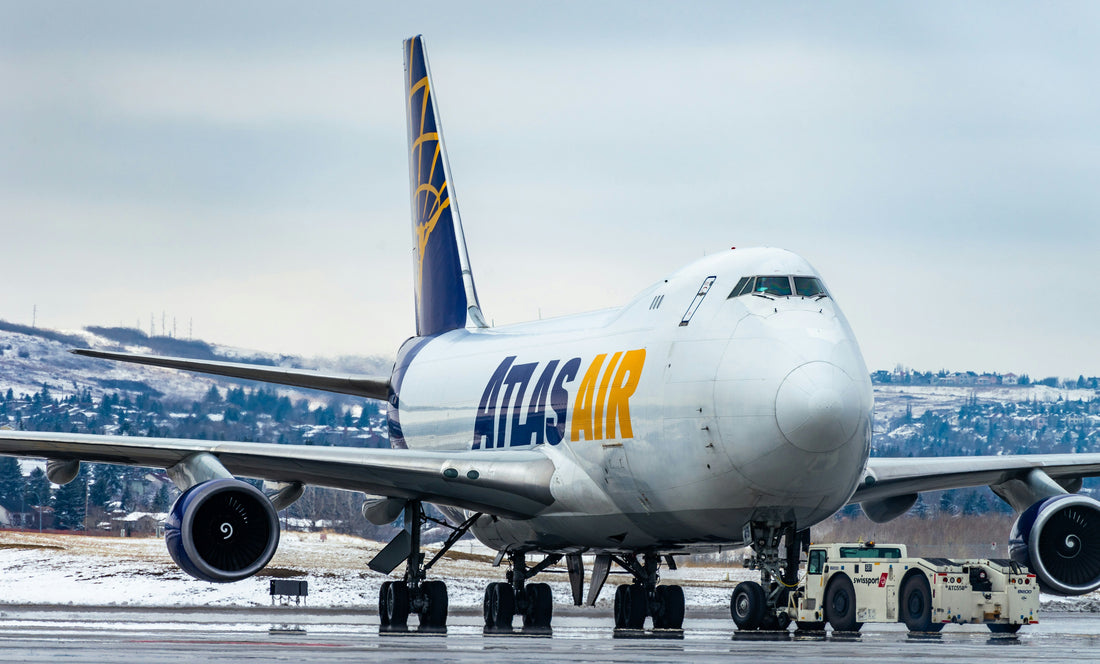
Faced with this declining demand, Boeing officially announced the end of 747 production. The last unit, a cargo model destined for Atlas Air, was delivered in January 2023, marking the end of an era. After more than 50 years of reign, the Jumbo Jet bids farewell, leaving behind an unparalleled legacy in aviation history.
Even though its production has ceased, the Boeing 747 will continue to fly for several more years, notably as cargo planes or on special missions. Its imprint on aviation is indelible, and its influence will be felt for a long time in the development of modern aircraft.
Discover our aircraft models
The Legacy of the Boeing 747
Even though the Boeing 747 is no longer in production, its impact on aviation remains immense. More than just an airplane, it has marked several generations of travelers, engineers, and aviation enthusiasts. Its legacy is found in the air transport industry, in the technologies it inspired, and in the collective imagination.
An Aircraft that Revolutionized Commercial Aviation
Before the arrival of the 747, air travel was expensive and reserved for an elite. Thanks to its large capacity, it allowed airlines to offer tickets at more affordable prices, thus opening up long-haul aviation to the masses. It also redefined airport infrastructure, forcing many airports to adapt to accommodate this giant of the skies.
A Model that Inspired Modern Aircraft
Many elements of the 747 have influenced subsequent generations of aircraft. Its widebody fuselage concept is now the standard for long-haul flights. Its advances in terms of engine power, range, and flight management served as a basis for new models such as the Boeing 777, the 787 Dreamliner, or the Airbus A350, which adopt some principles while being more fuel-efficient.
An Aircraft that Continues to Fly
Even though the majority of passenger 747s have been retired, many examples remain in service as cargo planes. Thanks to its ability to carry heavy loads and its robustness, it remains one of the most used cargo aircraft in the world. Modified versions of the 747 also continue to carry out special missions, such as Air Force One or certain scientific projects.
A Symbol of Aviation
Finally, beyond its technical role, the Boeing 747 will always remain a strong symbol of aviation. Its instantly recognizable design, its history, and its impact on the industry make it a true legend. Even in several decades, it will be remembered as one of the greatest successes in aviation history.
The Boeing 747 may have taken its final bow, but its influence will live on for a long time, both in the sky and in the hearts of enthusiasts.
Conclusion
The Boeing 747 is not just an airplane; it's an aviation legend. From its first flight in 1969 to its last model delivered in 2023, it marked an era and transformed the world of air transport. With its technical innovations, its ability to carry thousands of passengers, and its impact on how we travel, the Jumbo Jet redefined the boundaries of the sky.
Today, although 747 production has ended, its legacy lives on. The technologies it introduced, its influence on modern aircraft design, and its central role in aviation history make it an indispensable pioneer. Even though its last commercial flights are becoming rare, the 747 continues to fly, whether as a cargo version, on special missions, or as a symbol of a golden age of air transport.
The Boeing 747 will be remembered as a titan of the skies, a true icon that defied the laws of engineering and changed the way we explore the world.
FAQ: We answer all your questions
What is the capacity of the Boeing 747?
The capacity of the Boeing 747 varies depending on the version and interior layout, but it can carry between 366 and 660 passengers. The most recent versions, such as the 747-8, can accommodate up to 660 passengers in a high-density configuration.
Why is the Boeing 747 no longer produced?
The Boeing 747 is no longer produced mainly due to competition from more fuel-efficient twin-engine aircraft that are better suited to the needs of modern airlines. Aircraft like the Boeing 777 and the Airbus A350 offer lower operating costs while being able to cover similar distances, which made the 747 less profitable.
Who still uses the Boeing 747?
The Boeing 747 is still primarily used by airlines for cargo flights, as its large cargo capacity and robustness make it an excellent choice for air freight. Some companies like Atlas Air and Korean Air continue to operate it, while specific versions, such as Air Force One, are used for government missions and special transport.
What is the price of a Boeing 747?
The price of a Boeing 747 varies depending on the model and specifications, but on average, a new 747-8 costs approximately 375 million dollars. Older versions, such as the 747-400, generally sell for a lower price, depending on their age and condition.
How many passengers can a Boeing 747-8 accommodate?
A Boeing 747-8 can accommodate up to 660 passengers in a high-density configuration. In a more standard configuration, with economy, business, and first-class seats, it can carry approximately 410 to 524 passengers.
What is the range of a Boeing 747?
The range of a Boeing 747 varies by model, but the 747-400 has a range of approximately 13,450 kilometers, while the 747-8, the most recent version, can travel up to 14,320 kilometers nonstop. This allows it to perform long-haul flights between continents.
What is the takeoff speed of a Boeing 747?
The takeoff speed of a Boeing 747 depends on several factors, but it is generally around 280 to 300 km/h (approximately 150 to 160 knots). This speed can vary depending on the aircraft's weight, weather conditions, and airport altitude.
1 comment
Please send me the image of the plane carrying the nose of the 747 from Toulouse to the Boeing factory