
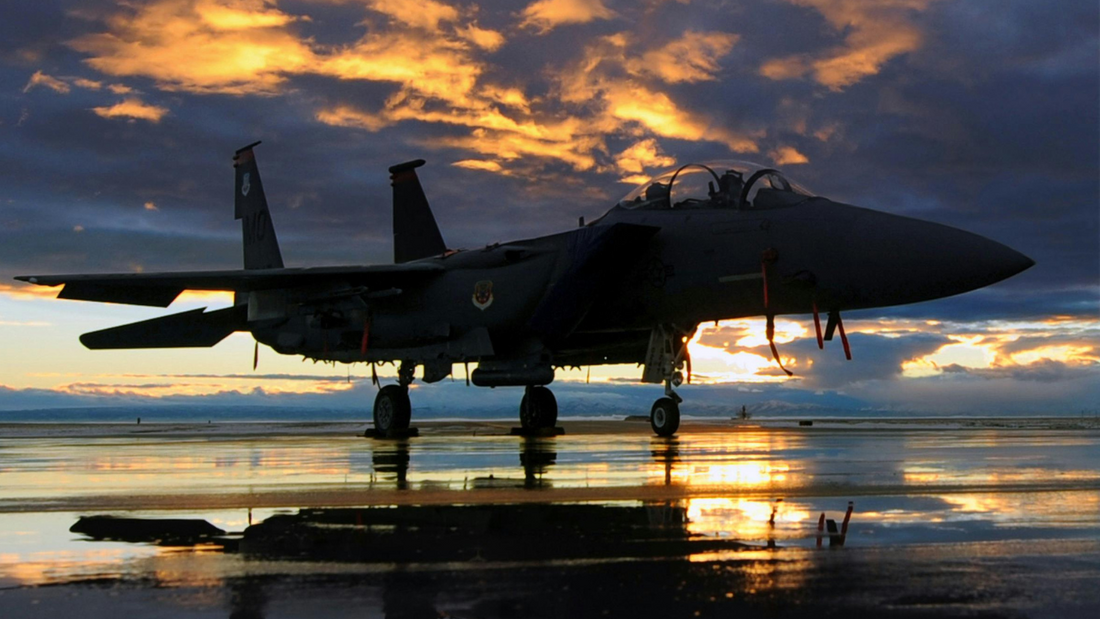
The History of the F-14 Tomcat
Partager
If you're an aviation enthusiast, you've undoubtedly heard of the F-14 Tomcat. This iconic fighter jet has left its mark on several generations, both for its performance and its legendary appearance in the film Top Gun, alongside Tom Cruise. But behind the Hollywood glamor lies a fascinating history, made up of technological innovations, real-world missions, and strategic decisions by the US Navy.
In this article, we'll take you on a journey to discover the F-14 Tomcat, from its genesis to its retirement from service, including the major milestones of its career. A tribute to a true legend of military aviation.
The Origins of the F-14 Tomcat
The Tense Context of the Cold War
In the 1960s, the world was in the midst of the Cold War. Tensions between the United States and the Soviet Union spurred the development of increasingly advanced defense systems. The US Navy, eager to maintain air superiority, sought to replace the F-4 Phantom, which had become obsolete in the face of new Soviet threats.
The VFX Program: Birth of an Exceptional Naval Fighter
It was in this context that the VFX (Naval Fighter Experimental) program was launched. The objective: to create a fighter jet capable of defending aircraft carriers at long range, with cutting-edge technology and extraordinary performance.
Grumman won the contract and developed the F-14 Tomcat, an aircraft designed from the outset to dominate the sky, both in close combat and at long range.
A Concentration of Technology for its Time
The Famous Variable-Sweep Wings
One of the most distinctive features of the F-14 is its wings. They can automatically adjust according to speed and maneuver, ranging from 20° to 68°. At low speeds, they extend widely to maximize lift, while at high speeds, they sweep back to improve aerodynamics. An impressive technology for its time.
A Revolutionary Radar: AN/AWG-9
The F-14 is also equipped with an ultra-high-performance radar, the AN/AWG-9. Coupled with the AIM-54 Phoenix missile, this system can track up to 24 targets and engage 6 simultaneously at over 150 km. For its time, this was simply revolutionary. No other fighter offered such detection and strike range.
Formidable Performance
Powered by two turbofan engines, the F-14 can reach over Mach 2.3 (approximately 2,400 km/h). It is also capable of complex maneuvers despite its imposing size. Its two-seat configuration (pilot + radar operator) makes it a very effective platform for long-range missions.
An Impressive Career in the US Navy
Operational Debut
The F-14 entered service with the US Navy in 1974. From its first missions, it established itself as the guardian of American carrier strike groups. Its primary role: to intercept any aerial threat before it reached the aircraft carriers.
Missions in the Gulf and the Middle East
The Tomcat was notably engaged during Operation Desert Storm in 1991, and then in Afghanistan in the 2000s. Although initially designed for interception, it was adapted for ground attack thanks to the LANTIRN system. It then became a multirole aircraft, capable of performing precision strikes.
Phased Retirement from Service
Despite its qualities, the F-14 was expensive to maintain. Its maintenance was complex, spare parts became scarce, and technological advancements gradually rendered it obsolete. It was officially retired from active US Navy service in 2006, replaced by the F/A-18 Super Hornet, which was more modern and less costly.
The F-14 in Popular Culture
Top Gun: The Global Spotlight
It's hard to talk about the F-14 without mentioning Top Gun. Released in 1986, the film propelled the Tomcat into the spotlight. The spectacular flight scenes, aerial dogfights, the rivalry between pilots... Everything was there to captivate the general public. For many viewers, it was their first contact with the world of fighter aviation.
A True Icon for Enthusiasts
Even today, the F-14 holds a special place in the hearts of aviation enthusiasts. Models, flight simulators, YouTube videos… it continues to fascinate, long after its retirement. The Tomcat has become a symbol, almost a myth.
An Enduring Legacy
An Influence on Subsequent Aircraft
The F-14 paved the way for many innovations adopted on other aircraft. Its variable-sweep wings, long-range radar, and philosophy of distant interception inspired the development of other fighters.
Facing Its Successors
The F/A-18 Super Hornet, which replaced it, is more modern and versatile, but many consider that the F-14 had a unique allure and power. Even the F-22 Raptor and F-35 Lightning II, though much more recent, have not yet generated the same fervor.
Anecdotes and Little-Known Facts
-
The F-14 was exported only once… to Iran, before the 1979 revolution. To this day, some units are still airworthy there.
-
In the US Navy, mechanics affectionately nicknamed the Tomcat "The Turkey" due to the way its wings moved on the ground.
-
Each hour of F-14 flight required approximately 40 hours of maintenance, which largely contributed to its high operating cost.
Conclusion
The F-14 Tomcat is much more than just a fighter jet. It is a symbol of power, a concentration of technology, and a true aerial star. Its history, marked by technical achievements and emblematic missions, continues to inspire enthusiasts worldwide.
Now retired from service, it remains etched in memory. Like a giant of the skies that, for over 30 years, reigned supreme on the flight decks of the US Navy.
Watch a video about the history of the F-14 Tomcat:
FAQ: We Answer All Your Questions
Why was the F-14 retired?
Mainly because of its high maintenance cost and technical complexity. It was replaced by more economical and modern aircraft.
Is the F-14 still flying anywhere?
Yes, in Iran. Iran is the only country outside the United States to have used the F-14, and some are still operational there.
What is its maximum speed?
The F-14 can reach approximately Mach 2.34, or over 2,400 km/h.
What is the difference between an F-14 and an F/A-18?
The F-14 is an interceptor designed for long-range defense. The F/A-18 is more versatile and modern, but less impressive in terms of speed and range.