
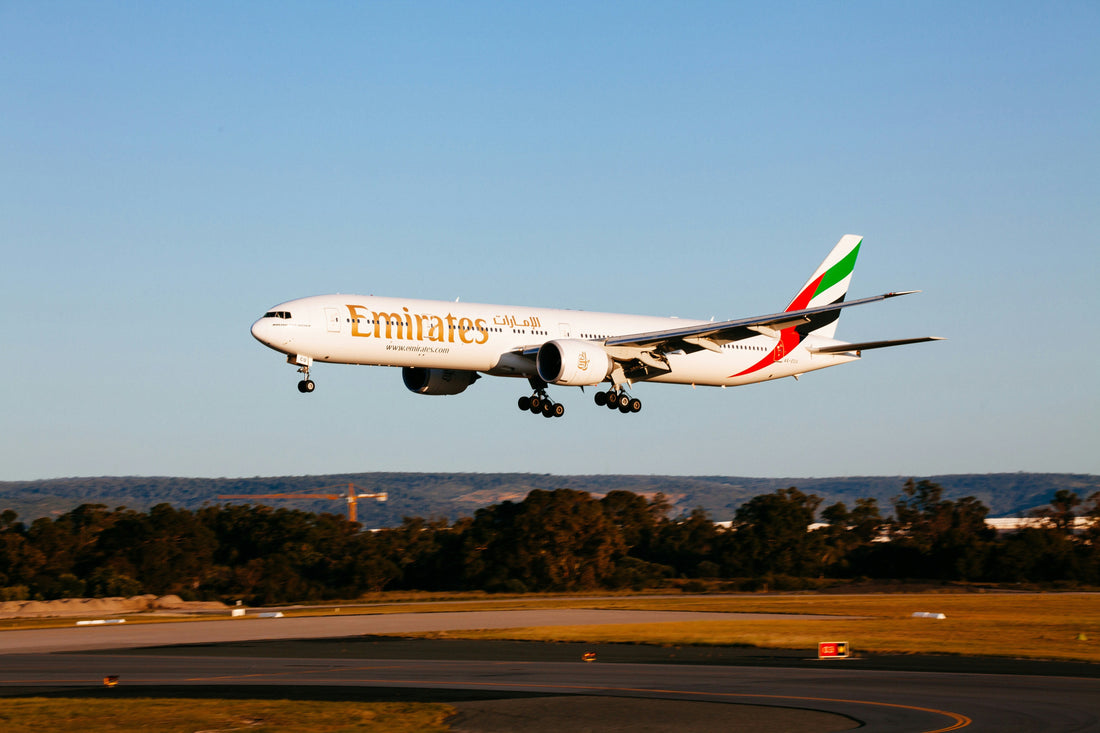
How much does an airliner cost?
Partager
Buying an airliner is a colossal investment that far exceeds the mere price displayed in manufacturers' catalogs. Airbus, Boeing, Embraer… Each model has its cost, but also its own factors that influence its price: onboard technology, capacity, fuel consumption, maintenance… Not to mention that an airplane can also be bought used or leased.
Introduction
When we talk about airliners, we often imagine these giants of the sky transporting hundreds of passengers across the world. But behind these impressive machines lies a crucial question: how much do they really cost?
The price of an airliner is not limited to the catalog price advertised by manufacturers like Airbus or Boeing. Several elements come into play: the size of the aircraft, the embedded technology, the interior configuration chosen by airlines, not to mention the ancillary costs associated with its operation.
In this article, we will explore in detail the prices of commercial aircraft, the factors that influence their cost, and what such an investment truly represents for an airline. You might be surprised by some of the figures!
Factors influencing the price of an airliner
The price of an airliner depends on many criteria. It's not just a price set by the manufacturer, but a combination of technical and economic choices that influence the final cost.
Aircraft size and capacity
An aircraft designed to transport 100 passengers over short distances will obviously not cost the same as a long-haul aircraft capable of accommodating more than 400 travelers. The larger an aircraft, the more expensive its design, materials, and engines. For example, an Airbus A220, a single-aisle aircraft used for regional flights, is much more affordable than a Boeing 777, designed for intercontinental flights.
Technologies and materials used
Aviation is constantly evolving to improve aircraft efficiency and profitability. The latest models, such as the Airbus A350 or the Boeing 787, use lighter composite materials that reduce fuel consumption. This innovation comes at a cost, but it allows airlines to save money in the long run.
Onboard configuration and equipment
Aircraft are not sold with a standard layout. Each airline customizes the interior according to its needs: economy class, business or first-class seats, entertainment equipment, Wi-Fi connection… All of this impacts the final price. An aircraft configured in a high-end version with private suites and lounges will cost much more than a model densified to maximize the number of seats.
By combining all these elements, we can better understand why prices can vary so much from one model to another. But then, how much does an airliner actually cost depending on its type? That's what we'll see in the next section.
Prices of main commercial aircraft models
The prices of airliners vary depending on their size, capacity, and technology. Here is an overview of the prices of the most common models used by airlines.
Short and medium-haul aircraft
These aircraft, designed for flights of a few hours, are the most widespread in the sky. They are mainly used for domestic and European connections.
-
Airbus A320neo: around 110 million dollars
-
Boeing 737 MAX: between 100 and 120 million dollars depending on the version
-
Embraer E195-E2: around 60 million dollars
These aircraft are valued for their versatility and optimized consumption, which allows airlines to save on fuel.
Long-haul aircraft
Intended for intercontinental flights, these aircraft are larger and equipped to offer more comfort to passengers over long distances.
-
Boeing 787 Dreamliner: between 250 and 300 million dollars
-
Airbus A350: around 320 million dollars
-
Boeing 777X: around 400 million dollars
Their high cost is explained by their more powerful engines, extended range, and advanced technology that reduces fuel consumption.
Regional and low-cost aircraft
These aircraft are intended for short distances and niche markets, such as connections between secondary cities or high-rotation low-cost flights.
-
ATR 72-600: around 30 million dollars
-
Bombardier CRJ900: around 50 million dollars
They offer a more affordable alternative to classic single-aisle aircraft and allow companies to open new routes at a lower cost.
Of course, these prices are estimates and vary depending on negotiations between airlines and manufacturers. Furthermore, buying an aircraft is only the beginning of the expenses, as its operation represents an even greater cost. We will look at this in the next section.
Discover our airliner models
Total operating cost: beyond the purchase price
Buying an airliner is a colossal investment, but it's only the tip of the iceberg. Operating an aircraft represents much higher costs in the long run. Between fuel, maintenance, insurance, and staff salaries, an airline's budget is not limited to the aircraft's purchase price.
Fuel: the biggest expense
Fuel is one of the highest expenditure items for an airline. For example, a Boeing 737 consumes about 3,000 liters of jet fuel per flight hour, while an Airbus A350 consumes nearly twice that on long journeys. With fluctuations in oil prices, this charge can heavily impact an airline's profitability.
Maintenance and repairs: an unavoidable budget
An aircraft must be regularly maintained to ensure its safety and reliability. Maintenance includes daily checks, in-depth revisions after a certain number of flight hours, and unforeseen repairs. These costs can reach several million dollars per year per aircraft.
Insurance and pilot training
Insuring an airliner costs several hundred thousand dollars a year. Added to this is pilot training, which must be regularly updated, especially when a company acquires a new aircraft requiring specific certification.
Purchase or lease: which is the better option?
Rather than buying an aircraft, many airlines choose to lease it from a specialized company (leasing). This solution allows them to limit their initial investments and more easily renew their fleet. In return, they commit to contracts of several years, with rents that can reach several hundred thousand dollars per month.
In summary, owning an aircraft represents much more than a simple purchase price. It is a true ecosystem of costs that a company must master to remain profitable. But are there alternatives to reduce these expenses? Can buying a used aircraft be a good deal? That's what we will see in the next section.
Comparison: new vs used aircraft
Buying a new aircraft is not the only option for an airline. The used market often offers more economical alternatives, but with certain constraints. So, is it better to invest in a brand new aircraft or opt for a used model?
The price of used aircraft: significant savings
A new aircraft costs several tens or even hundreds of millions of dollars, whereas a used aircraft can be acquired for 30 to 70% of its initial price, depending on its age and condition. For example, a 10-year-old Boeing 737 can sell for around 20 to 30 million dollars, compared to over 100 million for a new model.
Why does an aircraft lose value?
As with cars, aircraft undergo progressive depreciation. Several factors influence this depreciation:
-
Aircraft age: the older it is, the more its value decreases.
-
Number of flight hours: an aircraft that has accumulated many cycles (takeoffs and landings) wears out faster.
-
Technological updates: newer models consume less fuel and are cheaper to maintain, which reduces the attractiveness of older generations.
The hidden costs of a used aircraft
While buying a used aircraft may seem economical, the ancillary costs should not be overlooked. An older aircraft often requires upgrades, especially to meet current environmental and safety standards. Moreover, its maintenance can be more expensive and spare parts more difficult to find.
New or used aircraft: what do companies choose?
Major airlines generally prefer to invest in new aircraft to benefit from the latest technologies and optimize their operating costs. In contrast, low-cost airlines and cargo carriers often buy used aircraft, which are more affordable and suited to their needs.
Ultimately, the choice between a new aircraft and a used model depends on a company's priorities: investing long-term with a state-of-the-art aircraft or making immediate savings with an already used aircraft.
But then, what is the future of the aviation market and how will these costs evolve? That's what we will see in the conclusion.
Find our aircraft models
Conclusion
In summary, the cost of an airliner is much more complex than a simple purchase price. It depends on many factors, ranging from the size of the aircraft to the technology used, as well as customization and the maintenance required to ensure its proper operation. Buying an aircraft is a strategic decision that can represent an investment of several hundred million dollars, but it doesn't stop there.
Airlines must also consider recurring costs such as fuel, maintenance, insurance, and, of course, staff training. Depending on a company's specific needs, the choice of a new or used aircraft can have a considerable impact on the profitability of the operation.
In the near future, the trend could evolve with the arrival of more ecological models, such as those that use biofuels or hybrid technologies, thus reducing long-term operating costs. Aviation continues to transform, and it will be interesting to see how these innovations will influence the airliner market.
Whether you are an aviation enthusiast or looking to better understand the industry, it is clear that the purchase and operation of an airliner is a complex process, but essential to the global air transport economy.
FAQ: we answer all your questions
What is the price of an Airbus A320?
The price of a new Airbus A320 varies around 110 million dollars, although this amount can fluctuate depending on the specifications and options chosen by the airline. Used versions, meanwhile, can be acquired at a much lower price, depending on their age and condition.
What is the price of a new Boeing 747?
A new Boeing 747 costs about 400 million dollars, depending on the model and specifications chosen. This price may vary slightly depending on the options and configurations requested by the airline.
What is the price of a Boeing 777?
The price of a new Boeing 777 generally ranges from 350 to 400 million dollars, depending on the chosen model (such as the 777-200, 777-300 or 777X) and the customized specifications by the airline.
What is the price of a Boeing 737 Max?
The price of a Boeing 737 MAX varies between 100 and 120 million dollars, depending on the specific version (such as the 737 MAX 7, 737 MAX 8, or 737 MAX 9) and the options chosen by the airline.
What is the price of an A380?
The price of a new Airbus A380 is approximately 445 million dollars, although this amount may vary depending on the specifications and options requested by the airline.
What is the price of a new Airbus A350?
The price of a new Airbus A350 is approximately 320 million dollars, although this amount may fluctuate depending on the configurations and options chosen by the airline.
What is the price of an Airbus A320neo?
The price of a new Airbus A320neo is approximately 110 million dollars, although this amount may vary depending on the specific options and configurations chosen by the airline.
1 comment
Osez créer une entreprise aéronautique…