
Why don't planes crash when an engine fails?
Partager
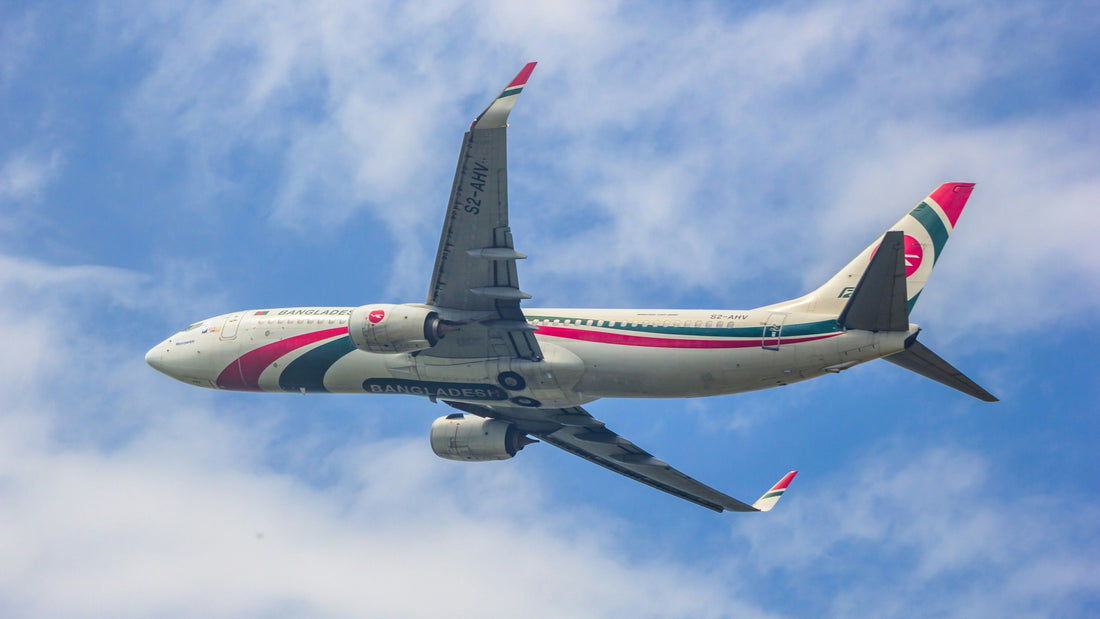
When flying, one concern often comes up: "What happens if the engines stop?" The idea of an engine failure might seem dramatic, but in reality, an airplane doesn't fall like a stone. Even without engines, it continues to fly, thanks to its wings and the procedures pilots have in place.
Misconceptions about engine failure
Many passengers believe that an airplane constantly needs its engines to stay in the air. In reality, engines primarily provide thrust, which means moving the plane forward. But what keeps a plane in the sky is the lift created by its wings.
So, if an engine stops, the plane doesn't suddenly fall. It continues to glide, like a glider or even like a bird soaring through the air without flapping its wings.
How an airplane stays in flight without engines
An airplane is designed to remain aerodynamic. Its wings convert air movement into lift, which allows it to maintain altitude.
When it loses thrust, the plane simply enters a glide: it slowly loses altitude while moving forward. The airspeed over the wings continues to create lift, which is why it doesn't fall vertically.
👉 In short: an airplane without an engine remains a large glider.
How far can an airplane travel without engines?
This is a matter of glide ratio, which is the ratio of distance traveled to altitude lost.
-
A modern airliner has a glide ratio of approximately 15 to 20. This means that for every kilometer descended, it travels 15 to 20 kilometers horizontally.
-
At 10,000 meters altitude, an airplane could therefore travel 150 to 200 km without engines, giving pilots ample time to find a solution.
In comparison, a sport glider can have a glide ratio of 40 to 60, clearly demonstrating that gliding is a normal capability of an aircraft.
Procedures planned by pilots
Pilots regularly train to manage engine failures in a simulator. In the event of a real problem, they follow precise procedures:
-
Stabilize the aircraft by adopting the best gliding speed.
-
Analyze the situation and attempt a restart if possible.
-
Choose a safe trajectory toward an airport or an emergency landing zone.
👉 Famous examples prove this:
-
In 1983, the "Gimli Glider", an Air Canada Boeing 767, glided for over 100 km without engines before landing safely.
-
In 2009, Captain Sully Sullenberger landed his Airbus A320 on the Hudson River in New York after a dual engine failure caused by birds. All passengers survived.
Conclusion: why passengers don't need to worry
Even in the event of engine failure, airplanes are designed to continue flying and cover long distances by gliding. Pilots, trained for this type of situation, know how to maintain control and find the best solution.
Next time you're on a plane, remember: it's not the engines that "carry" it, but its wings.
Watch a video about airplane engine failures:
FAQ: We answer all your questions
Can an airliner glide without engines?
Yes, it can travel between 150 and 200 km from its cruising altitude.
How far can an airplane travel with engine failure?
With a glide ratio of 15 to 20, it can travel 15 to 20 km for every km descended.
What do pilots do in case of engine failure?
They apply emergency procedures, stabilize the aircraft, and look for a safe landing site.
Do airliner pilots train for this type of situation?
Yes, pilots regularly practice managing engine failures in a simulator.
Can an airplane land safely without engines?
Yes, several real-life cases have proven this, such as the Hudson River ditching in 2009.
How does an airplane wing work? (Simple and clear explanation)