
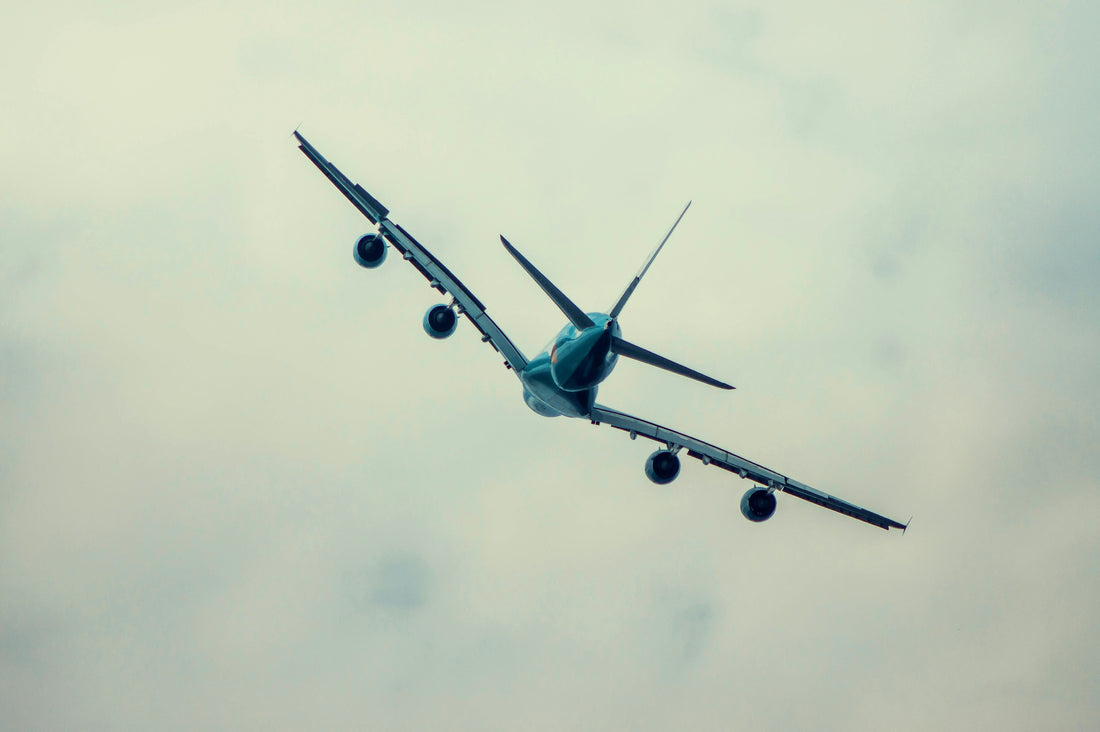
The genesis of the Airbus A380: how was the world's largest commercial aircraft born?
Partager
It's hard not to be impressed by the massive silhouette of the Airbus A380. With its two decks, four engines, and a capacity that can exceed 850 passengers in a high-density configuration, this aircraft has become an icon of modern aviation. But behind this technical feat lies a fascinating story, made of ambitions, colossal industrial challenges, and audacious bets. Let's look back at the genesis of the largest airliner ever built.
Why Airbus decided to build a very large aircraft
In the 1990s, the world's skies were dominated by one giant: the Boeing 747. Nicknamed the "Queen of the Skies," it reigned supreme on long-haul flights. Airbus, which had established itself as a serious competitor with its A300, A310, and A340, wanted to go further. The idea: design an aircraft capable of carrying more passengers over long distances, while consuming less fuel per seat.
Major airport hubs, such as London Heathrow or Paris-Charles de Gaulle, were starting to become saturated. Analysts at the time predicted an explosion in air traffic in the coming decades. For Airbus, it became strategic to offer an aircraft capable of meeting this growth by optimizing available slots.
The A3XX project: the beginnings of a giant
It was in 1994 that Airbus officially launched the preliminary studies for the A3XX project, the code name for the future A380. The objective was clear: surpass the 747, both in capacity and performance. Several configurations were considered, including a triple-fuselage aircraft or one with two superimposed decks.
Ultimately, Airbus opted for an unprecedented design: a true full double-deck, from nose to tail. This architecture allowed for up to 40% more passengers than the 747, without excessively lengthening the aircraft. A feat that, in turn, presented extraordinary technological challenges.
Unprecedented technical and logistical challenges
Building such a behemoth is no small feat. The A380 required a complete rethinking of production lines. Airbus, with its sites spread across France, Germany, Spain, and the United Kingdom, had to organize colossal logistics to transport the different sections of the aircraft to Toulouse, where final assembly took place.
The wings, manufactured in Broughton in the UK, the front and central sections in Hamburg and Saint-Nazaire, and the stabilizers in Getafe, Spain, had to travel by boat, road, and even river barge. This extraordinary convoy became a spectacle in itself, especially when it crossed small villages in Southwest France, at night, at reduced speed.
On a technical level, everything was out of proportion: the length of the fuselage (nearly 73 meters), the wingspan (nearly 80 meters), hundreds of kilometers of cabling… Every detail represented a challenge. Even airports had to adapt, widening their runways and modifying their jet bridges to accommodate this giant.
The first flight: a moment etched in history
On April 27, 2005, in Toulouse, the A380 prototype took off for the first time. On board were six test crew members and countless measuring instruments. The flight lasted nearly four hours and went smoothly. A success lauded worldwide.
This inaugural flight marked a turning point. Airbus proved it could compete with Boeing in all segments, including very large aircraft. The first orders quickly rolled in: Singapore Airlines, Emirates, Qantas… The enthusiasm was there, despite the delays that would soon follow.
A commercial adventure fraught with pitfalls
Despite the initial euphoria, the commercialization of the A380 did not go as well as expected. Accumulated delays, particularly due to wiring problems between the different software versions used in the factories, led to significant cost overruns.
Moreover, the market was evolving. Airlines began to favor more flexible and economical twin-engine aircraft, such as the Boeing 787 or the Airbus A350. The hub-and-spoke model (large interconnected airports) lost ground to point-to-point, which was more direct and more profitable.
Discover all our Airbus models
A legacy that transcends profitability
Even though A380 production ceased in 2021, its impact remains immense. It pushed the boundaries of aeronautical engineering, inspired generations of engineers, and left its mark on people's minds. It remains today one of the most comfortable aircraft for passengers, with unparalleled silence and stability in flight.
Emirates, which made it a pillar of its fleet, continues to fly it daily. Other airlines, such as Lufthansa and British Airways, have brought it out of their hangars after Covid, proving that the giant still has a bright future ahead of it.
Conclusion
The story of the Airbus A380 is that of a dream come true. That of a crazy technical and industrial gamble, driven by the ambition to create the largest aircraft of all time. Even if its commercial success was mixed, the A380 marked a major page in the history of aeronautics. And even today, when it cleaves the clouds, it reminds us that man is capable of building the extraordinary.
Watch a documentary on the history of the A380:
FAQ: We answer all your questions
Why was the Airbus A380 built?
To address the saturation of major airports and offer a more profitable alternative for long-haul flights.
When did the A380's first flight take place?
April 27, 2005, in Toulouse.
How many A380s were produced?
251 units were built between 2005 and 2021.
Why did Airbus stop production?
Demand dropped due to the emergence of smaller, more flexible, and more economical aircraft.